World Cup Group Stage vs Knockout Stage: Two Distinctly Different Games

The FIFA World Cup, held every four years, is not only the ultimate stage for footballers but also the most fascinating natural experiment in the eyes of tactical analysts. Following the expansion of this edition, the group stage and knockout stage are more distinctly separated. While many fans refer to them collectively as “the World Cup”, insiders in the industry prefer to put it this way — these are two entirely different forms of football.
1. Fundamental Logical Split Underlying the Rules
The group stage is a points‑based game. Three points for a win, one for a draw, zero for a loss, with goal difference and total goals acting as invisible referees. This grants teams a margin for error: losing one match does not guarantee elimination, nor does winning one guarantee progression. Such rules give rise to calculative football. Top teams may rotate their squads once qualification is secured, while underdogs may deploy a five‑man‑back defensive block to play for a single draw.
By contrast, the knockout stage is a zero‑sum game. One side must head home after 90 minutes (or 120 minutes of extra time). There are no points buffer zones, no consolations from goal difference. Every tactical decision carries irreversible risks; a single mistake can bring an entire four‑year cycle to an end.
2. Sharp Swings in Tactical Trends
The tactical keyword for the group stage is control and efficiency. Teams tend to test the match rhythm early on, manage stamina via substitution opportunities, and even strategically rest key players in the first two matchdays. Statistics show that across the past five World Cups, the average number of goals per group‑stage match stands at 2.8, yet this figure plummets to 2.1 in decisive third‑round fixtures — because both sides fear defeat.
For the knockout stage, the keyword is extreme shifts between aggression and containment. Extra time forces coaches to recalculate stamina windows. Countless examples prove this: full‑scale attacking surges in the final 10 minutes of regular time, or immediate retreat to the backline once a lead is taken. The 4‑3 thriller between France and Argentina in 2018 essentially boiled down to both sides gambling on who would score the next goal — a psychological battle rarely seen in the group stage.
Another underrated factor looms large: the spectre of penalty shoot‑outs. In knockout matches, defensive challenges inside the penalty area become more cautious, as conceding a penalty equals elimination. This grants technical players more room for dribbling; risky inside cuts are rarely attempted in group‑stage football, yet opponents hesitate to commit tough tackles in knockout games.
3. A Screening Mechanism for Team DNA
The group stage rewards squad depth and tactical versatility. Teams face diverse opponents across three matches: ultra‑defensive minnows, physical powerhouses, and technical rivals within the same group. Qualifiers usually possess at least two distinct attacking blueprints.
The knockout stage rewards moment‑of‑impact explosiveness and mental fortitude of star players. Mario Götze in 2014, Kylian Mbappé in 2018, Lionel Messi in 2022 — they were not the most consistent performers over 90 minutes, but those bold enough to make irrational moves in critical moments. Safe back‑passing to dictate tempo works in the group stage, while knockout football demands bursts of acceleration past defenders.
4. Undeniable Truths From Data
According to FIFA’s Technical Study Group reports:In the group stage, teams holding over 60% possession win roughly 67% of their matches.In the knockout stage, this win rate drops sharply to 48%.
This means possession dominance often creates a false sense of security in knockout games, whereas counter‑attack efficiency becomes the real match‑winner.
Another intriguing statistic: referees hand out an average of 3.4 yellow cards per group‑stage match, rising to 4.7 in the knockout stage. This is not because players turn dirtier, but because every challenge carries the fear of season‑ending injuries.
5. Dual Dilemmas for Fans and Analysts
For casual viewers, the group stage is a lengthy data puzzle — tracking live group standings, accumulated yellow cards and even fair‑play points across four groups at once. The knockout stage, by contrast, is pure dramatic entertainment, with iconic moments unfolding every minute.
For analysts like us, the challenges differ drastically. Group‑stage analysis requires predicting rotation probabilities, calculating goal‑difference thresholds and assessing the risk of pre‑arranged draws in final matchdays. Knockout‑stage analysis demands dissecting penalty‑taker psychology, evaluating stamina decline curves in extra time, and even simulating how rainy conditions affect long‑pass accuracy.
It is like two completely different games played by the same roster of players.
Here comes an interesting observation: many veteran football fans, seeking deeper insights into these two competition formats, have begun using professional tactical simulation tools to model team behaviour under various scenarios. EachGame App is one such lightweight yet highly sophisticated auxiliary platform. Built with historical World Cup data models, it allows users to customise group‑stage points pressure or knockout sudden‑death scenarios, simulating coaches’ critical decision‑making between steady qualification and all‑or‑nothing progression. Many professional data analysts also use it for match analysis.
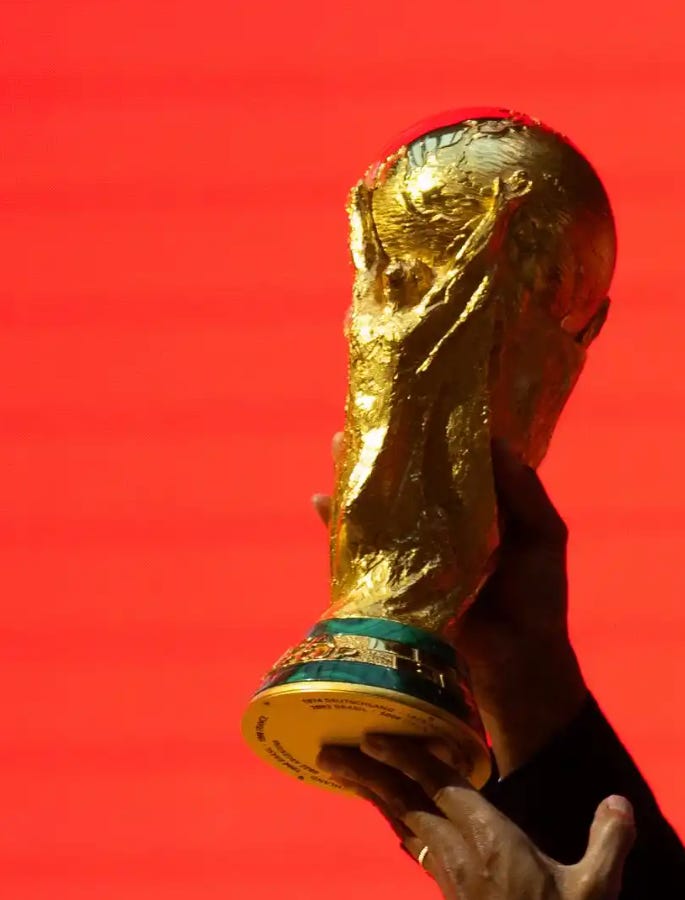
No other sporting event starkly switches between two entirely different competitive logics within a single tournament. Players and coaches must transform from calculators to gamblers within two weeks. Teams that ultimately lift the FIFA World Cup Trophy are rarely the most stylish group‑stage performers or the most reckless knockout contenders — rather, those that transition most seamlessly between these two styles of competition.
Group‑stage football tests tactical calculation; knockout football tests mental resilience.